The Best Vanilla Cake Recipe
Introduction
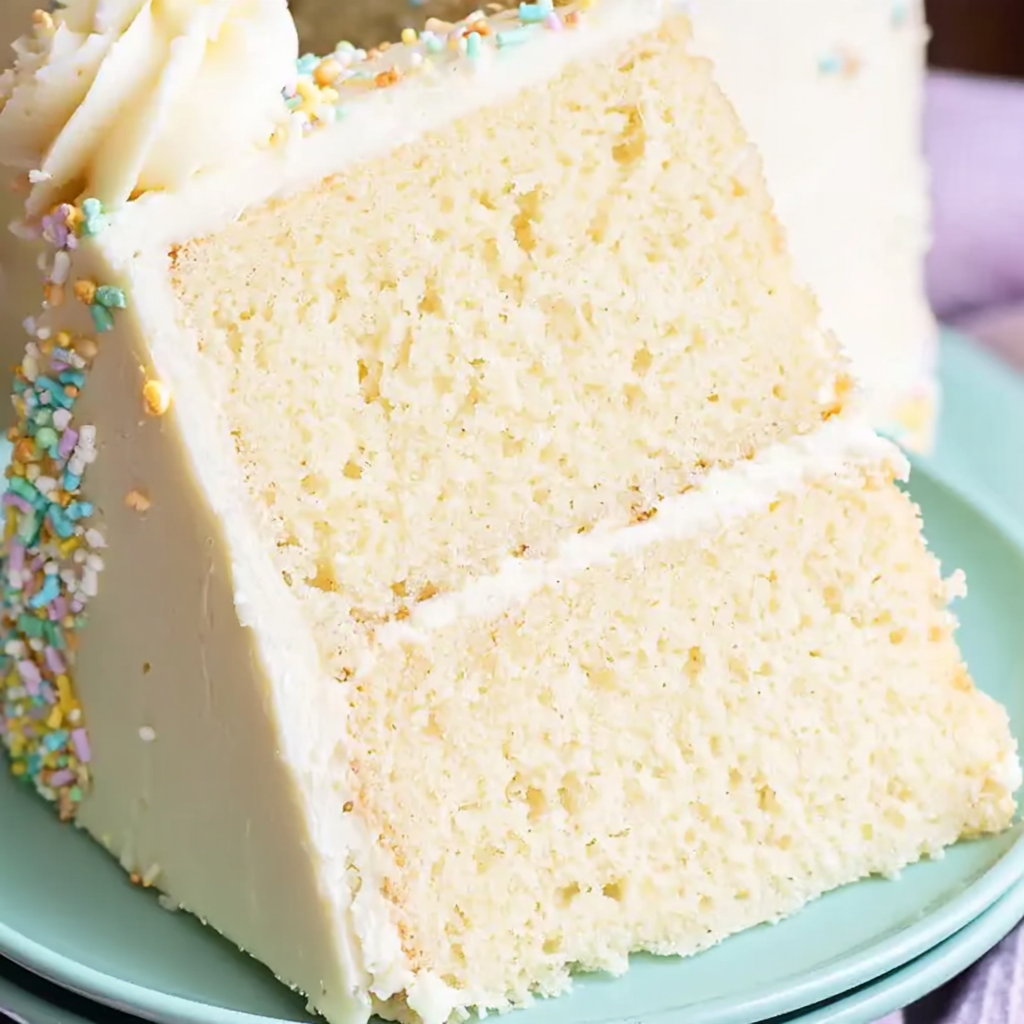
This Vanilla Cake Recipe makes a soft, tender cake with a classic vanilla flavor and a rich, silky vanilla buttercream. The cake gets its moist texture from room-temperature butter and buttermilk, while the homemade buttercream gives it a smooth and creamy finish.
Finished with colorful confetti sprinkles and nonpareils, this cake is simple enough for a weekend bake but festive enough for birthdays, celebrations, and special occasions.
Quick Recipe Overview
- Prep Time: 30 minutes
- Bake Time: 25–30 minutes
- Cooling Time: 1 hour
- Total Time: About 2 hours
- Servings: 10–12
- Category: Dessert
- Cuisine: American
- Method: Baking
Ingredients
For the Vanilla Cake
- 2¼ cups all-purpose flour
- 2¼ tsp baking powder
- ¾ tsp salt
- ¾ cup unsalted butter, room temperature
- 1½ cups granulated sugar
- 3 large eggs, room temperature
- 1½ tsp vanilla extract
- 1 cup buttermilk or whole milk, room temperature
For the Vanilla Buttercream
- 6 large egg whites
- 1½ cups granulated sugar
- 2 cups unsalted butter, room temperature
- 2 tsp vanilla extract
For Assembly
- Confetti sprinkles
- Nonpareils
Step-by-Step Instructions
1. Prepare the Cake Pans
Preheat your oven to 350°F (175°C).
Grease and line two 8-inch round cake pans with parchment paper. Lightly grease the parchment as well.
2. Mix the Dry Ingredients
In a medium bowl, whisk together the flour, baking powder, and salt.
Set aside.
3. Cream the Butter and Sugar
In a large mixing bowl, beat the room-temperature butter and granulated sugar on medium speed for about 3–4 minutes, until light, fluffy, and noticeably paler.
This step helps create a lighter cake texture, so don’t rush it.
4. Add the Eggs and Vanilla
Add the eggs one at a time, mixing well after each addition.
Add the vanilla extract and mix until incorporated.
If the mixture looks slightly curdled, don’t worry. It will come together once the dry ingredients and milk are added.
5. Add the Flour and Milk
Add about one-third of the dry ingredients to the butter mixture and mix on low speed.
Add half of the buttermilk or whole milk and mix gently.
Continue alternating the dry ingredients and milk, ending with the dry ingredients.
Mix only until the batter is combined. Avoid overmixing.
6. Bake the Cakes
Divide the batter evenly between the prepared cake pans.
Smooth the tops and bake for approximately 25–30 minutes, or until a toothpick inserted into the center comes out clean or with a few moist crumbs.
Allow the cakes to cool in their pans for about 10 minutes, then turn them onto a wire rack.
Let them cool completely before frosting.
Making the Vanilla Buttercream
7. Prepare the Egg Whites and Sugar
Place the egg whites and granulated sugar in a heatproof mixing bowl.
Set the bowl over a saucepan of gently simmering water, making sure the bottom of the bowl does not touch the water.
Whisk continuously until the sugar has dissolved and the mixture reaches about 160°F (71°C).
The mixture should feel smooth rather than grainy when rubbed carefully between your fingers.
8. Whip the Meringue
Transfer the mixture to a stand mixer fitted with a whisk attachment.
Whip on medium-high speed until the meringue forms stiff, glossy peaks and the bowl has cooled to room temperature.
This can take approximately 8–12 minutes.
9. Add the Butter
Switch to the paddle attachment.
With the mixer running on medium speed, gradually add the room-temperature butter, one piece at a time.
Continue mixing until the buttercream becomes smooth and creamy.
It may look curdled or loose temporarily during mixing. Keep beating and it should come together.
10. Add the Vanilla
Add the vanilla extract and mix until fully incorporated.
The finished buttercream should be silky, smooth, and easy to spread.
Assemble the Cake
11. Level the Cakes
Once the cake layers are completely cool, use a serrated knife to carefully level the tops if necessary.
Place one cake layer on a serving plate or cake board.
12. Add the Buttercream
Spread an even layer of vanilla buttercream over the first cake layer.
Place the second cake layer on top.
Cover the top and sides with the remaining buttercream.
For a clean finish, apply a thin crumb coat first, chill the cake for about 15–20 minutes, then add the final layer of buttercream.
13. Decorate
Decorate the cake with confetti sprinkles and nonpareils.
You can cover the sides with sprinkles, add them around the bottom edge, or scatter them over the top for a simple celebration-style finish.
Slice and serve.
Recipe Tips for Success
- Use room-temperature ingredients. Room-temperature butter, eggs, and milk help create a smoother batter.
- Cream the butter and sugar properly. This helps incorporate air into the batter.
- Don’t overmix after adding flour. Mix only until the ingredients are combined.
- Cool the cake completely before frosting. Warm cake can melt the buttercream.
- Use a kitchen thermometer for the buttercream. Heating the egg whites and sugar to 160°F (71°C) is important for a Swiss meringue-style buttercream.
- Be patient with the buttercream. It may look separated while the butter is being incorporated but often comes together with continued mixing.
- Chill between frosting layers if you want a sharper, cleaner finish.
Ingredient Substitutions
- Buttermilk: Whole milk can be used as listed. Buttermilk provides slightly more tenderness and tang.
- Unsalted butter: Salted butter can be used, but reduce or omit the salt in the cake.
- Vanilla extract: Vanilla bean paste can be used for a stronger vanilla flavor.
- All-purpose flour: Cake flour can produce an even softer crumb, although the texture will be slightly different.
Recipe Variations
Funfetti Vanilla Cake
Fold a small amount of confetti sprinkles into the cake batter before baking. Use sprinkles designed to hold their color in baked goods.
Chocolate Vanilla Cake
Add a thin layer of chocolate buttercream between the cake layers while keeping the vanilla buttercream on the outside.
Berry Vanilla Cake
Add fresh strawberries, raspberries, or blueberries between the cake layers with a thin layer of buttercream.
Lemon Vanilla Cake
Add fresh lemon zest to the cake batter for a subtle citrus flavor that pairs beautifully with vanilla.
Storage and Reheating
Store the frosted cake covered in the refrigerator for up to 4 days.
For the best texture, allow slices to sit at room temperature for about 20–30 minutes before serving.
Unfrosted cake layers can be wrapped tightly and refrigerated for several days or frozen for up to 2 months.
This cake does not need to be reheated.
Serving Suggestions
Serve this vanilla cake with:
- Fresh berries
- Strawberries and whipped cream
- Vanilla ice cream
- Fresh fruit
- Chocolate sauce
- Caramel sauce
- A cup of coffee
- Hot tea
For birthdays, add extra confetti sprinkles and colorful nonpareils just before serving.
Nutrition Information
Estimated per serving, assuming 12 servings, and may vary depending on portion size and the exact ingredients used.
- Calories: 650 kcal
- Protein: 7 g
- Carbohydrates: 72 g
- Fat: 38 g
- Saturated Fat: 23 g
- Fiber: 1 g
- Sugar: 50 g
- Sodium: 330 mg
Frequently Asked Questions
Can I use whole milk instead of buttermilk?
Yes. The recipe specifically allows whole milk as a substitute. Buttermilk gives the cake a slightly more tender crumb and subtle tang.
Why do my cake layers come out dense?
Overmixing the batter after adding the flour can develop too much gluten and make the cake dense. Also make sure your baking powder is fresh and that your butter is properly creamed with the sugar.
Can I make this cake ahead of time?
Yes. Bake the cake layers a day ahead, wrap them tightly, and refrigerate them. You can frost and decorate the cake the following day.
Why does my buttercream look curdled?
Swiss meringue buttercream can temporarily look curdled as the butter is incorporated. Continue mixing. If the mixture is too warm, chill the bowl briefly and continue beating.
Can I freeze vanilla cake?
Yes. Wrap unfrosted cake layers tightly in plastic wrap and place them in a freezer-safe container or bag. Freeze for up to 2 months for the best quality.
Can I use a different frosting?
Yes. Cream cheese frosting, American buttercream, or whipped frosting can all be used if you prefer a different finish.
What sprinkles should I use?
Confetti sprinkles and nonpareils both work well. For sprinkles inside the cake batter, choose varieties that are labeled suitable for baking so they are less likely to bleed color.
Final Thoughts
This Vanilla Cake Recipe is a classic homemade cake with a soft crumb, simple vanilla flavor, and smooth Swiss meringue-style buttercream. The colorful sprinkles add a playful finish without making the recipe complicated.
Whether you’re making it for a birthday, family gathering, or simply want a homemade vanilla cake with a bakery-style finish, this recipe is a great one to keep in your collection.
PrintThe Best Vanilla Cake Recipe
This classic Vanilla Cake is soft, tender, and full of simple vanilla flavor, layered and finished with a smooth vanilla buttercream. Colorful confetti sprinkles and nonpareils add a fun finishing touch, making this homemade cake a great choice for birthdays, celebrations, or any sweet occasion.
- Prep Time: 30 minutes
- Cook Time: 30 minutes
- Total Time: 1 hour
- Yield: 12 servings
- Category: Dessert
- Method: Oven
- Cuisine: American
- Diet: Vegetarian
Ingredients
- For the vanilla cake:
- 2 1/4 cups all-purpose flour
- 2 1/4 teaspoons baking powder
- 3/4 teaspoon salt
- 3/4 cup unsalted butter, room temperature
- 1 1/2 cups granulated sugar
- 3 large eggs, room temperature
- 1 1/2 teaspoons vanilla extract
- 1 cup buttermilk or whole milk, room temperature
- For the vanilla buttercream:
- 6 large egg whites
- 1 1/2 cups granulated sugar
- 2 cups unsalted butter, room temperature
- 2 teaspoons vanilla extract
- For assembly:
- Confetti sprinkles
- Nonpareils
Instructions
- Preheat the oven to 350°F (175°C). Grease and line two 8-inch round cake pans with parchment paper.
- In a medium bowl, whisk together the flour, baking powder, and salt.
- In a large bowl, beat the room-temperature butter and granulated sugar until light and fluffy, about 3–4 minutes.
- Add the eggs one at a time, mixing well after each addition. Stir in the vanilla extract.
- With the mixer on low, add the dry ingredients in three additions, alternating with the buttermilk or whole milk. Begin and end with the dry ingredients. Mix just until combined.
- Divide the batter evenly between the prepared cake pans and smooth the tops.
- Bake for 25–30 minutes, or until a toothpick inserted into the center comes out clean.
- Allow the cakes to cool in the pans for about 10 minutes, then transfer them to a wire rack to cool completely.
- To make the buttercream, place the egg whites and granulated sugar in a heatproof bowl over a saucepan of gently simmering water. Whisk continuously until the sugar dissolves and the mixture reaches about 160°F (71°C).
- Transfer the egg white mixture to a mixer and whip on medium-high speed until a glossy, stiff meringue forms and the bowl has cooled to room temperature.
- Gradually add the room-temperature butter, a tablespoon at a time, mixing until smooth and creamy. Add the vanilla extract and mix until fully incorporated.
- To assemble, place one cooled cake layer on a serving plate. Spread an even layer of vanilla buttercream over the top.
- Place the second cake layer on top and frost the top and sides with the remaining buttercream.
- Decorate with confetti sprinkles and nonpareils. Slice and serve.
Notes
- Use room-temperature ingredients for a smoother batter and more even baking.
- Do not overmix the cake batter after adding the flour.
- Allow the cake layers to cool completely before frosting to prevent the buttercream from melting.
- If the buttercream becomes too soft, chill it briefly and whip again before frosting.
- Buttermilk gives the cake a slightly richer and more tender texture, while whole milk also works well.
- Store the finished cake covered at room temperature for up to 2 days or refrigerate for longer storage. Bring refrigerated cake closer to room temperature before serving.