Easter Cake Recipe
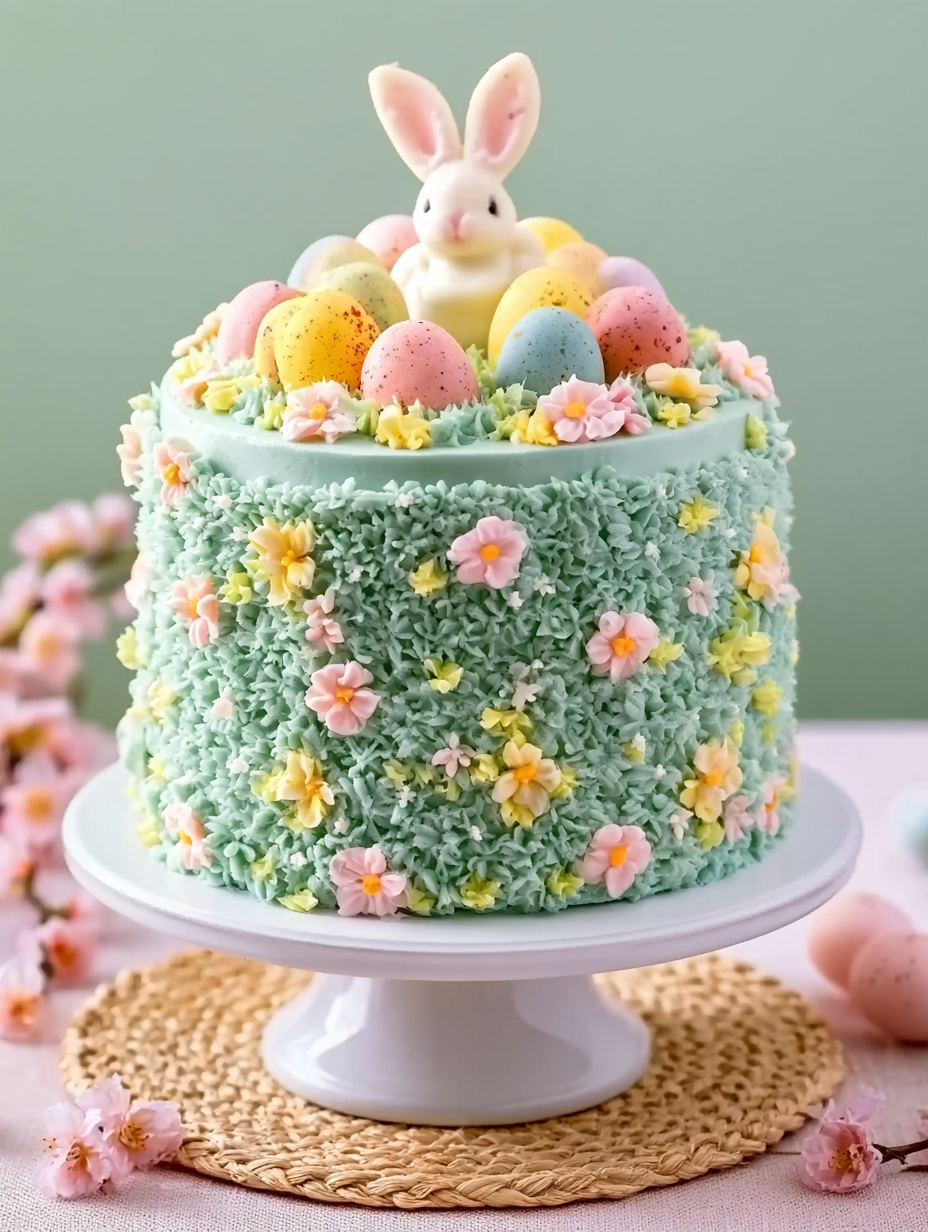
This Easter Cake is a cheerful springtime dessert made with three layers of vanilla cake, pastel blue vanilla buttercream, coconut “grass,” and colorful Easter eggs. It’s simple enough to prepare at home but has the kind of festive finish that makes it stand out on an Easter dessert table.
The pastel blue buttercream gives the cake a soft, elegant look, while the coconut flakes create a nest-like finish for the chocolate Easter eggs. A simple cocoa-and-water mixture is splattered over the frosting to create the delicate speckled effect.
You can use your favorite vanilla cake recipe for the three layers, or another 20 cm (8-inch) cake that you enjoy. The decoration is the star here, so this recipe is also a great way to turn a simple homemade cake into an Easter centerpiece.
Quick Recipe Overview
- Prep Time: Approximately 45 minutes
- Cook Time: Depends on the vanilla cake recipe used
- Decorating Time: Approximately 30 minutes
- Total Time: Approximately 1 hour 30 minutes, plus cooling time
- Servings: 10–12
- Difficulty: Intermediate
- Cuisine: American-inspired
- Course: Dessert
Times and servings are estimates because the exact vanilla cake recipe and baking instructions were not supplied.
Ingredients for Easter Cake
For the Vanilla Cake
- 1 vanilla cake, cut into 3 layers
- Alternatively, use another 20 cm (8-inch) cake of your choice
The ingredient list does not include the quantities or method for the vanilla cake, so use your preferred 20 cm/8-inch vanilla cake recipe.
For the Pastel Blue Vanilla Buttercream
- 340 g (3 sticks) unsalted butter, cut into 1.25 cm (1/2-inch) cubes and softened to approximately 18°C (64°F)
- 750 g (1.5 lb / 6 cups) soft icing sugar (powdered sugar), sifted
- 3 teaspoons vanilla extract
- 1–2 drops blue gel food coloring, or 1–2 teaspoons blue liquid food coloring
- 1/8 teaspoon salt
For the Frosting Speckles
- 1 tablespoon cocoa powder, sweetened or unsweetened
- 3 tablespoons boiling water
- 1 toothbrush or small basting brush
For Decorating
- 2 cups coconut flakes or shaved coconut
- 200 g (7 oz) small Easter eggs
Pastel-colored speckled Easter eggs work especially well for the finished design.
Step-by-Step Instructions
Step 1: Prepare the Cake Layers
Prepare your vanilla cake according to your chosen recipe. The finished cake should be approximately 20 cm (8 inches) in diameter and divided into three even layers.
Allow the cake layers to cool completely before decorating. If necessary, level the tops with a serrated knife so that each layer sits flat.
For easier assembly, you can wrap the cooled layers and chill them briefly before frosting.
Step 2: Make the Pastel Blue Buttercream
Place the softened butter in a large mixing bowl. Beat until smooth, pale, and creamy.
Gradually add the sifted icing sugar, mixing on low speed at first to prevent the sugar from flying out of the bowl. Once incorporated, increase the speed and beat until the buttercream is fluffy.
Add the vanilla extract and salt, then continue beating until evenly combined.
Add 1 drop of blue gel food coloring and mix thoroughly. Add another drop only if needed. The goal is a soft pastel blue rather than a deep blue.
If using liquid food coloring instead, add it gradually because the larger quantity can slightly change the consistency of the buttercream.
Step 3: Assemble the Cake
Place the first vanilla cake layer on a cake board or serving plate.
Spread an even layer of pastel blue buttercream over the top. Place the second cake layer on top and gently press it into position.
Repeat with another layer of buttercream, then place the final cake layer on top.
Apply a thin crumb coat of buttercream around the entire cake. This first layer helps trap loose crumbs.
Chill the cake until the buttercream feels firm enough to add the final coating.
Step 4: Apply the Final Buttercream Layer
Spread the remaining pastel blue buttercream over the top and sides of the cake.
Use a cake scraper or offset spatula to create a smooth finish. It does not need to be perfectly sharp or flawless because the coconut and speckled decoration will add texture.
Make sure there is enough buttercream on the top and sides for the coconut and cocoa speckles to adhere.
Step 5: Make the Cocoa Speckle Mixture
Place the cocoa powder in a small bowl.
Gradually add the boiling water while stirring until you have a thin, smooth cocoa mixture.
The mixture should be fluid enough to splatter from a toothbrush or basting brush but not so watery that it runs heavily down the cake.
Let it cool slightly before applying it to the buttercream.
Step 6: Create the Speckled Effect
Dip the tips of a clean toothbrush or basting brush into the cocoa mixture.
Hold the brush near the cake and gently flick the bristles toward the buttercream.
Work around the sides and top of the cake to create small, irregular brown speckles.
Start with a light application. It is easier to add more speckles than to remove them.
For a natural Easter-egg-inspired appearance, vary the size and density of the speckles rather than creating a perfectly even pattern.
Step 7: Add the Coconut
Scatter the coconut flakes over the top of the cake, concentrating them in the center to create a soft nest-like appearance.
You can also press a small amount of coconut onto selected areas of the buttercream if you want additional texture.
The coconut does not need to form a perfect circle. A slightly rustic nest shape gives the cake a more natural finish.
Step 8: Add the Easter Eggs
Arrange the small Easter eggs in the center of the coconut nest.
Use a mixture of colors if you have pastel eggs. Position some eggs upright and others on their sides to make the arrangement look more natural.
Once decorated, refrigerate the cake briefly if the buttercream is soft. This will help everything stay securely in place.
Recipe Tips for Success
- Start with completely cool cake layers. Warm cake will soften the buttercream and make assembly difficult.
- Use softened, not melted, butter. The butter should be soft enough to beat smoothly while still holding its structure.
- Sift the powdered sugar. This helps create a smoother buttercream.
- Add the blue coloring gradually. Pastel blue develops quickly, especially with concentrated gel coloring.
- Apply a crumb coat first. It prevents cake crumbs from becoming visible in the final frosting.
- Don’t oversaturate the speckle brush. Too much cocoa mixture can create large wet spots instead of delicate speckles.
- Chill before decorating if necessary. Firm buttercream makes the coconut and Easter eggs easier to position.
- Use lightweight decorations. Small Easter eggs work particularly well because they won’t put excessive pressure on the frosting.
- Don’t worry about perfect speckles. Random variation is what makes the decoration look natural.
Ingredient Substitutions
Can I Use a Different Cake Flavor?
Yes. Although vanilla cake provides a classic base, you can use another 20 cm (8-inch) cake if you prefer. A light lemon or almond cake would also work well with the pastel buttercream.
Can I Use Regular Buttercream?
Yes. The important part is having a buttercream that is firm enough to cover the cake and hold the decorations.
Can I Use Liquid Food Coloring?
Yes. The supplied recipe allows 1–2 teaspoons of blue liquid food coloring. Gel coloring is more concentrated and generally requires less.
Can I Use Unsweetened Coconut?
Yes. Unsweetened coconut works well and keeps the overall cake from becoming excessively sweet. Sweetened coconut can also be used if that is what you have available.
What Can I Use Instead of Easter Eggs?
You can decorate the cake with chocolate eggs, candy-coated eggs, miniature chocolate eggs, or other small Easter candies.
Easter Cake Variations
Pastel Pink Easter Cake
Replace the blue food coloring with a small amount of pink gel food coloring for a soft pink springtime cake.
Pastel Yellow Easter Cake
Use yellow food coloring instead of blue for a bright Easter-inspired finish.
Chocolate Easter Cake
Use a chocolate cake as the base and keep the pastel buttercream and coconut nest decoration for a chocolate-and-vanilla combination.
Lemon Easter Cake
Use a lemon-flavored cake instead of vanilla. The citrus flavor works especially well with the light pastel decoration.
Easter Bunny Cake
Add small chocolate bunny decorations around the coconut nest or place a larger chocolate bunny in the center instead of Easter eggs.
Storage and Reheating
How to Store Easter Cake
Because the cake is covered with buttercream, keep it in a cool place away from direct sunlight. If your room is warm, refrigerate the cake in a covered cake container.
Bring refrigerated cake out for a short time before serving so the buttercream can soften slightly.
How Long Does Easter Cake Last?
For the best texture and appearance, enjoy the cake within 2–3 days. Keep it properly covered to prevent the cake from drying out and absorbing refrigerator odors.
Can I Make Easter Cake Ahead of Time?
Yes. The cake layers can be baked ahead and stored until you are ready to decorate. The buttercream can also be prepared ahead and kept covered.
If the buttercream becomes firm after refrigeration, allow it to soften and beat it briefly again before using.
Can I Freeze Easter Cake?
The undecorated vanilla cake layers can generally be frozen well when tightly wrapped. For the best results, decorate the cake after the layers have thawed completely.
A fully decorated cake can be more difficult to freeze because the coconut, Easter eggs, and buttercream may change texture or appearance.
Serving Suggestions
Serve Easter Cake as the centerpiece of your Easter dessert table alongside:
- Fresh berries
- Strawberries and raspberries
- Tea or coffee
- Fresh fruit salad
- Lemonade or iced tea
- Other Easter desserts and chocolate treats
For the cleanest slices, use a sharp knife and wipe it between cuts.
Nutrition Information
Because the exact vanilla cake recipe was not provided, nutrition cannot be calculated precisely.
The following is a rough estimate per serving, assuming 12 servings and using the supplied buttercream and decorations. The actual values will vary depending on the vanilla cake, Easter eggs, buttercream amount, and specific brands used.
- Calories: Approximately 550–700 kcal
- Protein: Approximately 5–8 g
- Carbohydrates: Approximately 65–85 g
- Fat: Approximately 28–40 g
- Saturated Fat: Approximately 17–25 g
- Fiber: Approximately 2–4 g
- Sugar: Approximately 45–65 g
- Sodium: Approximately 200–350 mg
These are estimates rather than laboratory-tested values.
Frequently Asked Questions
What Is an Easter Cake?
An Easter Cake is a festive cake decorated specifically for Easter. This version uses vanilla cake, pastel blue buttercream, cocoa speckles, coconut, and colorful Easter eggs arranged like a small nest.
Can I Use a Store-Bought Vanilla Cake?
Yes. A plain 20 cm (8-inch) vanilla cake can be used as a shortcut. Make sure it is sturdy enough to be divided into three layers and covered with buttercream.
How Do I Get Pastel Blue Buttercream?
Add blue gel food coloring very gradually. Start with one drop, mix thoroughly, and add another only if needed. A small amount of concentrated coloring can create a soft pastel shade.
How Do I Make the Chocolate Speckles?
Mix cocoa powder with boiling water until smooth and fluid. Dip a clean toothbrush or basting brush into the mixture and gently flick the bristles toward the frosted cake.
Why Is My Buttercream Too Soft?
The butter may have been too warm, or the room may be hot. Chill the buttercream or finished cake briefly until the frosting firms up. Avoid adding excessive liquid coloring, which can also affect consistency.
Can I Make This Easter Cake Without Coconut?
Yes. Simply leave out the coconut or replace the nest decoration with chocolate shavings, crushed cookies, or additional Easter candies.
How Far Ahead Can I Decorate the Cake?
You can decorate the cake several hours before serving and keep it in a cool place or refrigerator as appropriate. If using fragile chocolate eggs or decorations, add them closer to serving time.
What Size Cake Pan Should I Use?
The supplied recipe specifies a 20 cm (8-inch) cake, but it does not specify the exact pan depth or baking method for the vanilla cake. Use a 20 cm/8-inch cake recipe designed to produce three layers.
Final Thoughts
This Easter Cake turns a simple vanilla layer cake into a festive spring centerpiece with just a few decorating ingredients. The pastel blue buttercream gives it a soft, elegant color, while the cocoa speckles, coconut nest, and colorful Easter eggs create the unmistakable Easter finish.
The decoration can also be adapted easily. Change the buttercream color, use different Easter candies, or swap the vanilla cake for chocolate or lemon. It is a flexible recipe that can be made to suit your Easter table and the ingredients you already have.
PrintEaster Cake Recipe
- Prep Time: 45 minutes
- Cook Time: 30 minutes
- Total Time: 1 hour 15 minutes
- Yield: 12 servings
- Category: Dessert
- Method: Baking
- Cuisine: American
- Diet: Vegetarian
Ingredients
Vanilla Cake
- 1 vanilla cake, 3 layers (20 cm / 8-inch cake)
Pastel Blue Vanilla Buttercream
- 340 g / 3 sticks unsalted butter, cut into 1.25 cm / 1/2-inch cubes and softened to 18°C / 64°F
- 750 g / 1.5 lb (6 cups) soft icing sugar / powdered sugar, sifted
- 3 tsp vanilla extract
- 1–2 drops blue gel food colouring
- 1/8 tsp salt
Frosting Speckles
- 1 tbsp cocoa powder, unsweetened or sweetened
- 3 tbsp boiling water
- 1 toothbrush or basting brush
Decorating
- 2 cups coconut flakes or shaved coconut
- 200 g / 7 oz small Easter eggs, preferably pastel-colored speckled eggs
Instructions
- Prepare the three-layer vanilla cake according to your favorite vanilla cake recipe. Allow the cake layers to cool completely before decorating.
- To make the buttercream, beat the softened butter until pale, smooth, and fluffy.
- Gradually add the sifted powdered sugar, beating well after each addition.
- Add the vanilla extract and salt and continue beating until the buttercream is light and creamy.
- Add 1–2 drops of blue gel food coloring and mix until the buttercream becomes a soft pastel blue. Add more coloring only if needed.
- Place the first cake layer on a serving plate and spread an even layer of buttercream over the top.
- Add the second cake layer and repeat with another layer of buttercream. Place the final cake layer on top.
- Cover the entire cake with a thin crumb coat of buttercream. Chill briefly until firm.
- Apply a final, smooth layer of pastel blue buttercream over the top and sides of the cake.
- For the chocolate speckles, mix the cocoa powder and boiling water together until smooth and thin enough to splatter.
- Dip a clean toothbrush or basting brush into the cocoa mixture. Hold it close to the cake and flick the bristles gently to create small chocolate speckles across the buttercream.
- Press the coconut flakes gently around the top edge of the cake to create a nest-like border.
- Arrange the pastel Easter eggs in the coconut nest on top of the cake.
- Refrigerate the finished cake briefly to allow the buttercream to set, then bring it to room temperature before serving.
Notes
- Use a 20 cm / 8-inch three-layer vanilla cake for the best proportions.
- For smooth buttercream, make sure the butter is softened to the recommended temperature rather than melted.
- Sift the powdered sugar before adding it to the butter for a smooth frosting.
- Gel food coloring gives a stronger color without adding too much liquid to the buttercream.
- Use pastel-colored speckled Easter eggs for a classic spring and Easter look.
- Be gentle when creating the cocoa speckles to avoid making the splatters too large.
- Store the decorated cake covered in the refrigerator and allow it to soften slightly before serving.