Chicken Pad Thai Recipe
Introduction
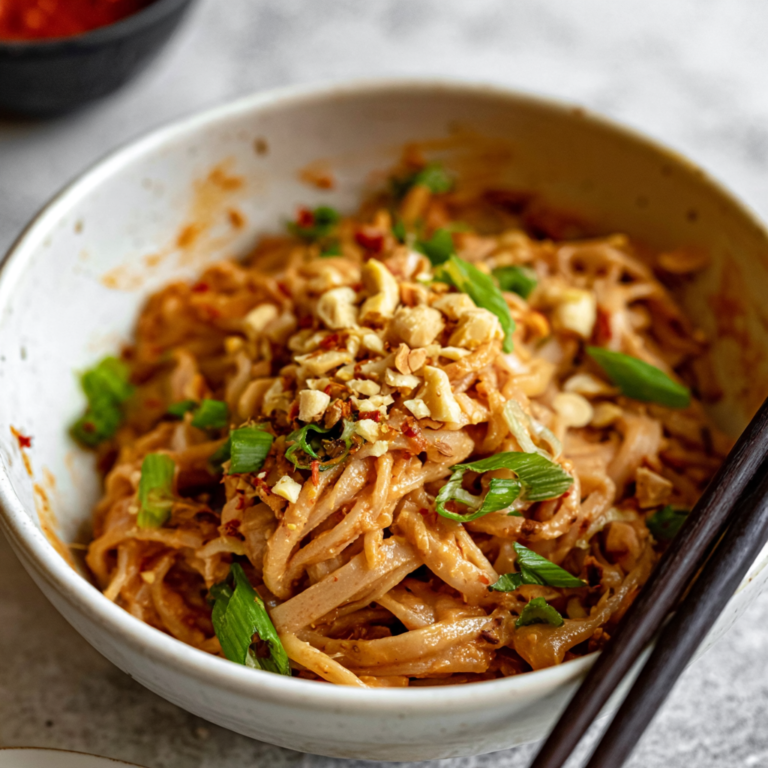
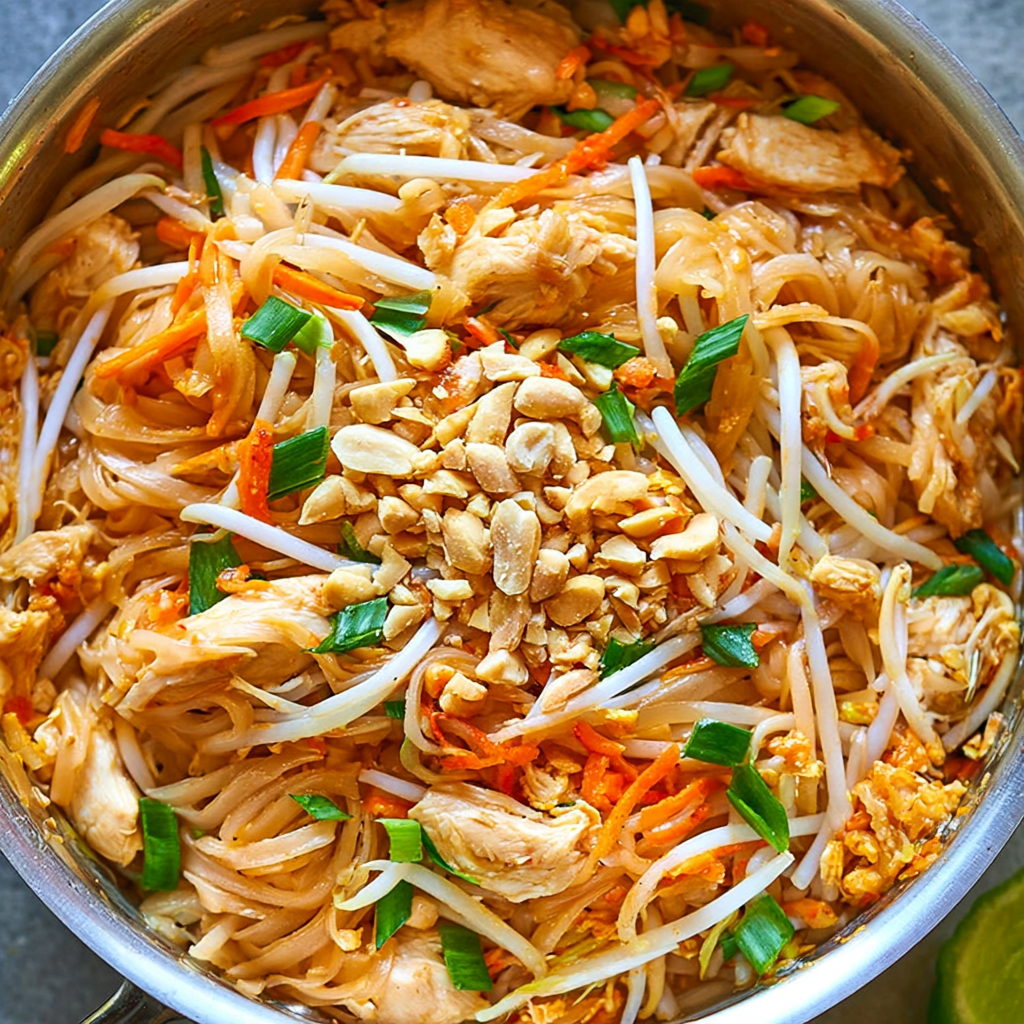
This Chicken Pad Thai Recipe is a simple homemade take on one of Thailand’s most popular noodle dishes. Flat rice noodles are tossed with tender chicken, crunchy carrots, green cabbage, garlic, scrambled egg, roasted peanuts, and a tangy-sweet sauce made with lime juice, fish sauce, soy sauce, and honey.
The recipe has a nice balance of savory, sweet, tangy, and spicy flavors. It’s also flexible, so you can adjust the lime juice or Sriracha to suit your taste.
Once the ingredients are prepared, the cooking moves quickly, making this a great choice for a flavorful weeknight dinner.
Quick Recipe Overview
- Prep Time: 20 minutes
- Cook Time: 20 minutes
- Total Time: 40 minutes
- Servings: 6
- Course: Main Course, Dinner
- Cuisine: Thai-inspired
- Calories: Approximately 590 per serving
Ingredients
Chicken Pad Thai
- 1 pound flat rice noodles
- 3 tablespoons toasted sesame oil
- 1 tablespoon coconut oil
- 1 medium onion, diced small
- 1 pound boneless, skinless chicken breast, sliced into thin long strips
- 3–5 cloves garlic, finely minced or pressed
- 1 tablespoon ground ginger, or 1/2 tablespoon fresh ginger
- 8 ounces thinly sliced green cabbage, about 3–4 loosely packed cups
- 1 cup shredded carrots
- 1/3 cup low-sodium soy sauce
- 1/4 cup fish sauce
- 1/4–1/3 cup freshly squeezed lime juice
- 2 tablespoons honey or agave syrup
- 1 large egg, scrambled
- 2 tablespoons Sriracha, optional and to taste
- 3 green onions, sliced into thin rounds
- 2/3 cup chopped roasted peanuts
Optional: Substitute 1/3 cup minced fresh Thai basil for the green onions.
Step-by-Step Instructions
1. Prepare the Rice Noodles
Cook the flat rice noodles according to the package directions. Be careful not to overcook them because they will continue cooking when added to the stir-fry.
Drain the noodles well and set them aside.
If you’re preparing the noodles ahead of time, toss them with a small amount of the toasted sesame oil to help prevent sticking.
2. Prepare the Sauce
In a small bowl, whisk together the low-sodium soy sauce, fish sauce, lime juice, honey or agave syrup, and Sriracha if using.
Start with 1/4 cup lime juice and add more later if you prefer a stronger citrus flavor.
Set the sauce aside.
3. Cook the Chicken
Heat the coconut oil and about 1 tablespoon of the toasted sesame oil in a large wok or skillet over medium-high heat.
Add the sliced chicken and cook for about 4–6 minutes, stirring occasionally, until browned and cooked through.
Transfer the chicken to a plate and set aside.
4. Cook the Onion and Aromatics
Add the diced onion to the same pan.
Cook for about 2–3 minutes until it begins to soften.
Add the minced garlic and ginger. Cook for another 30–60 seconds, stirring constantly, until fragrant.
5. Add the Vegetables
Add the sliced cabbage and shredded carrots.
Stir-fry for about 3–4 minutes. The vegetables should soften slightly while retaining some texture.
6. Add the Noodles and Sauce
Return the cooked chicken to the pan.
Add the rice noodles and pour the prepared sauce over everything.
Gently toss with tongs until the noodles are evenly coated and everything is heated through.
If the noodles seem dry, add a small splash of water and continue tossing.
7. Add the Egg
Push the noodles and chicken toward one side of the pan.
Add the scrambled egg and gently fold it into the noodles once heated.
Alternatively, you can scramble the egg separately and add it to the finished stir-fry.
8. Finish the Pad Thai
Add the remaining toasted sesame oil and toss everything together.
Stir in the sliced green onions.
Remove from the heat and sprinkle generously with the chopped roasted peanuts.
Taste and adjust the lime juice or Sriracha if needed.
Serve immediately.
Recipe Tips for Success
- Don’t overcook the rice noodles. Slightly firm noodles hold their texture better during stir-frying.
- Prepare everything before cooking. Pad Thai comes together quickly once the wok is hot.
- Slice the chicken thinly. Long, thin strips cook quickly and distribute nicely throughout the noodles.
- Use a large pan. Crowding the noodles and vegetables can make them steam instead of stir-fry.
- Balance the sauce. Start with less lime juice and Sriracha, then add more according to your taste.
- Keep some crunch. Don’t overcook the cabbage and carrots.
- Add peanuts at the end. This keeps their texture crisp.
- Use freshly squeezed lime juice. It gives the sauce a brighter flavor than bottled lime juice.
Ingredient Substitutions
Chicken Breast
Boneless, skinless chicken thighs can be used instead. Shrimp or tofu are also good alternatives.
Flat Rice Noodles
Use traditional Pad Thai rice noodles when available. Other medium-width rice noodles can also work.
Coconut Oil
Vegetable oil, canola oil, or another neutral cooking oil can replace coconut oil.
Honey
Agave syrup works as listed. You can also use another mild sweetener if needed.
Soy Sauce
Tamari can be used for a gluten-free option, provided the fish sauce and noodles are also suitable.
Green Cabbage
Shredded napa cabbage can be used as an alternative.
Peanuts
For a different texture, try chopped cashews, although peanuts provide the most traditional flavor for this style of dish.
Recipe Variations
Shrimp Pad Thai
Replace the chicken with peeled and deveined shrimp. Cook the shrimp just until pink and opaque before setting them aside.
Chicken and Shrimp Pad Thai
Use a combination of chicken and shrimp for a more substantial noodle dish.
Vegetarian Pad Thai
Replace the chicken with tofu and use a vegetarian fish sauce alternative. Check that the other ingredients are suitable for your dietary needs.
Spicy Chicken Pad Thai
Increase the Sriracha for a stronger kick. You can also serve extra Sriracha on the side.
Thai Basil Chicken Pad Thai
Replace the green onions with minced fresh Thai basil as suggested in the original ingredient list.
Extra Vegetable Pad Thai
Add additional vegetables such as bean sprouts, bell peppers, broccoli, or snap peas.
Storage and Reheating
Store leftover Chicken Pad Thai in an airtight container in the refrigerator for up to 3 days.
The noodles can become firm after refrigeration, so add a small splash of water when reheating.
Reheat gently in a skillet over medium heat, tossing occasionally until warmed through. You can also microwave individual portions in short intervals.
For the best texture, add fresh lime juice and chopped peanuts after reheating.
Serving Suggestions
Serve Chicken Pad Thai with:
- Fresh lime wedges
- Extra roasted peanuts
- Sriracha
- Fresh Thai basil
- Sliced green onions
- Fresh cilantro
- Bean sprouts
- Extra shredded carrots
A few lime wedges on the side are especially useful because everyone can adjust the acidity to their own preference.
Nutrition Information
Estimated per serving:
- Calories: 590
- Protein: 32g
- Carbohydrates: 70g
- Fat: 23g
- Saturated Fat: 7g
- Fiber: 4g
- Sugar: 11g
- Sodium: 1,450mg
Nutrition information is an estimate and can vary depending on the specific ingredients, brands, and portion sizes used.
Frequently Asked Questions
What noodles are best for Chicken Pad Thai?
Flat rice noodles are the best choice. Look for medium-width rice noodles specifically made for Pad Thai if they’re available.
Can I make Chicken Pad Thai without fish sauce?
Yes, but fish sauce provides a distinctive savory flavor. You can use a vegetarian fish sauce alternative or adjust the soy sauce, although the final flavor will be different.
Why did my rice noodles become mushy?
Rice noodles can become mushy if they’re overcooked before going into the wok. Cook them according to the package directions and aim for slightly firm noodles.
Can I use fresh ginger instead of ground ginger?
Yes. The recipe provides 1/2 tablespoon fresh ginger as a substitute for the 1 tablespoon ground ginger.
Is Chicken Pad Thai spicy?
It can be mild or spicy depending on how much Sriracha you use. Since the Sriracha is optional, you can leave it out for a milder dish.
Can I make this recipe gluten-free?
Yes. Use certified gluten-free rice noodles and gluten-free soy sauce or tamari. Also check the labels of the fish sauce and other packaged ingredients.
Can I freeze Chicken Pad Thai?
Freezing isn’t recommended because rice noodles can become soft and change texture after thawing. Refrigerating leftovers for a few days gives better results.
How do I keep Pad Thai from sticking together?
Avoid overcooking the noodles, drain them well, and toss them with a little sesame oil if they need to sit before stir-frying.
Final Thoughts
This Chicken Pad Thai Recipe brings together everything you want in a satisfying noodle dinner: tender chicken, chewy rice noodles, crisp vegetables, scrambled egg, crunchy peanuts, and a bright sauce with sweet, savory, tangy, and spicy notes.
It’s a great homemade alternative to takeout and can easily be adjusted with more lime juice, Sriracha, vegetables, or peanuts to suit your taste.
PrintChicken Pad Thai Recipe
This Chicken Pad Thai Recipe is a flavorful and satisfying Thai-inspired dinner made with tender chicken, flat rice noodles, crunchy vegetables, lime juice, soy sauce, fish sauce, honey, sriracha, and roasted peanuts. It’s a quick homemade meal packed with sweet, savory, tangy, and spicy flavors.
- Prep Time: 15 minutes
- Cook Time: 20 minutes
- Total Time: 35 minutes
- Yield: 6 servings
- Category: Dinner
- Method: Stovetop
- Cuisine: Thai-Inspired
Ingredients
- 1 pound flat rice noodles
- 3 tablespoons toasted sesame oil
- 1 tablespoon coconut oil
- 1 medium onion, diced small
- 1 pound boneless skinless chicken breast, sliced into thin long strips
- 3 to 5 cloves garlic, finely minced or pressed
- 1 tablespoon ground ginger, or 1/2 tablespoon fresh ginger
- 8 ounces thinly sliced green cabbage, about 3 to 4 loosely packed cups
- 1 cup shredded carrots
- 1/3 cup low-sodium soy sauce
- 1/4 cup fish sauce
- 1/4 to 1/3 cup freshly squeezed lime juice
- 2 tablespoons honey or agave syrup
- 1 large egg, scrambled
- 2 tablespoons sriracha, optional and to taste
- 3 green onions, sliced into thin rounds, or 1/3 cup minced fresh Thai basil
- 2/3 cup chopped roasted peanuts, preferably reduced-salt
Instructions
- Cook the flat rice noodles according to the package directions until just tender. Drain well and set aside.
- In a large skillet or wok, heat the sesame oil and coconut oil over medium-high heat.
- Add the diced onion and cook for 2 to 3 minutes until it begins to soften.
- Add the sliced chicken and cook for about 5 to 7 minutes, stirring occasionally, until the chicken is cooked through.
- Add the garlic and ginger and stir-fry for about 30 seconds, until fragrant.
- Add the cabbage and shredded carrots. Cook for 2 to 3 minutes, keeping the vegetables slightly crisp.
- Stir in the soy sauce, fish sauce, lime juice, honey or agave, and sriracha if using.
- Add the cooked rice noodles and toss everything together until the noodles are evenly coated and heated through.
- Push the noodles and chicken to one side of the pan. Add the scrambled egg and cook briefly until set, then break it into small pieces and toss it into the noodles.
- Stir in the green onions or Thai basil and half of the chopped roasted peanuts.
- Serve immediately with the remaining peanuts sprinkled over the top. Add extra lime juice or sriracha to taste.
Notes
- Do not overcook the rice noodles; they should remain slightly firm before being added to the stir-fry.
- Fresh lime juice gives the best bright, tangy flavor.
- Adjust the sriracha according to your preferred level of heat.
- Reduced-sodium soy sauce and peanuts help keep the overall salt level more balanced.
- Thai basil can be used instead of green onions for a fresh herbal flavor.
- For the best texture, cook the stir-fry over medium-high to high heat and avoid overcrowding the pan.