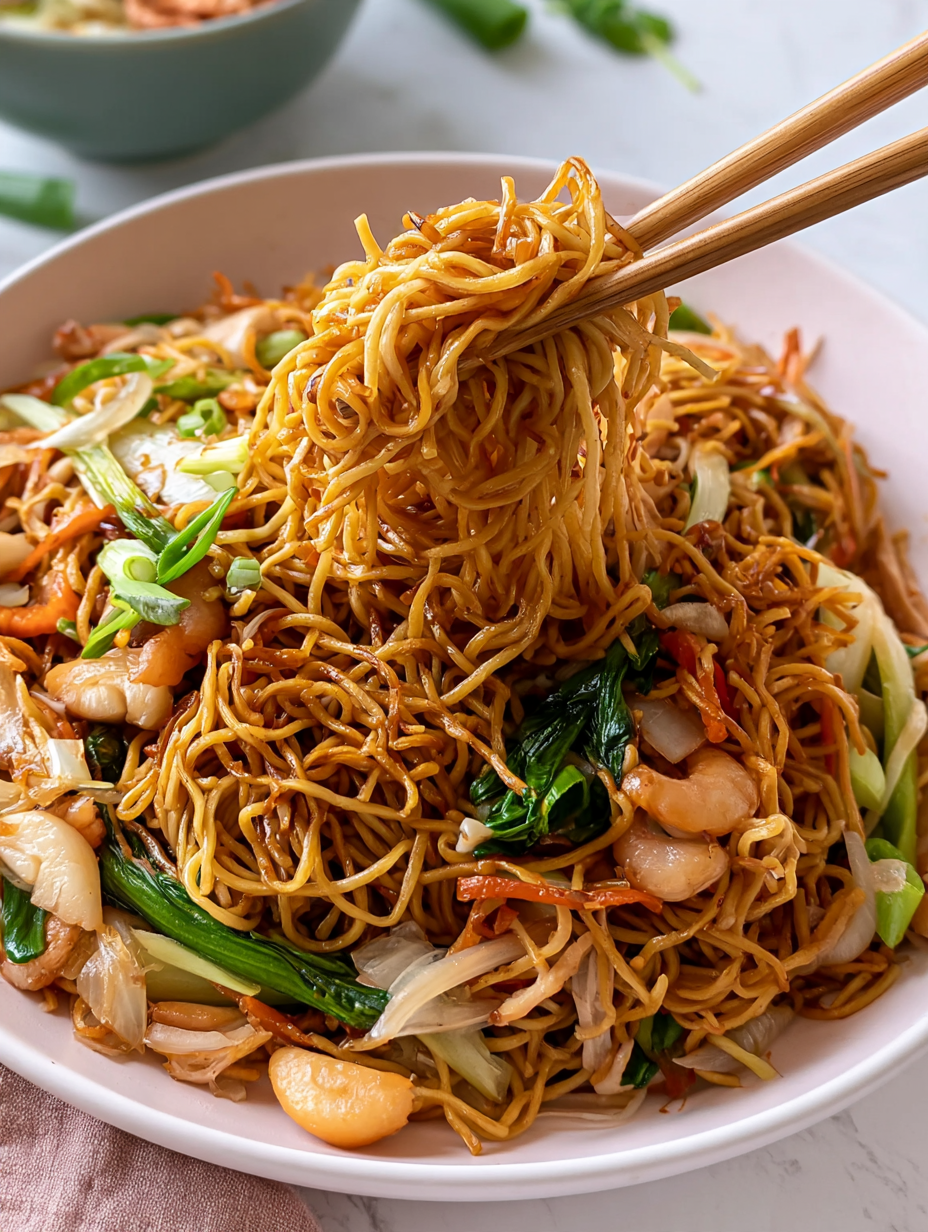
Cantonese Chow Mein Recipe
Introduction
Cantonese Chow Mein is a classic Chinese-style noodle dish known for its savory sauce, tender vegetables, and flavorful egg noodles. Made with thin Hong Kong-style chow mein noodles, crunchy bean sprouts, sliced onion, and green onions, this recipe delivers plenty of flavor with a simple combination of pantry sauces.
The secret to great chow mein is cooking the noodles properly and stir-frying everything over high heat. Dark soy sauce adds a rich color, regular soy sauce brings saltiness, and oyster sauce gives the dish a deep, savory flavor. A little sugar balances the sauce, while sesame oil adds a fragrant finish.
This version is straightforward to prepare at home and works well as a quick lunch, a side dish, or a main meal. Serve it hot from the wok for the best noodle texture and flavor.
Quick Recipe Overview
- Prep Time: 15 minutes
- Cook Time: 10 minutes
- Total Time: 25 minutes
- Servings: 3–4
- Difficulty: Easy to moderate
- Cuisine: Cantonese-inspired Chinese
- Course: Main course or side dish
Ingredients
For the Chow Mein
- 12 oz (340 g) thin, fresh Hong Kong-style chow mein egg noodles
- ½ small yellow onion, thinly sliced
- 5 stalks green onions, cut into 2-inch pieces, whites and greens separated
- 2 cups bean sprouts
- 3 tablespoons corn oil or another neutral oil
- 1 teaspoon sesame oil, to finish
For the Stir-Fry Sauce
- 2 tablespoons dark soy sauce
- 1 tablespoon regular soy sauce
- 1 tablespoon oyster sauce
- ½ teaspoon fish sauce
- 1 tablespoon granulated sugar
- 1 tablespoon water
Step-by-Step Instructions
1. Prepare the Stir-Fry Sauce
In a small bowl, combine the dark soy sauce, regular soy sauce, oyster sauce, fish sauce, sugar, and water.
Stir until the sugar dissolves and the sauces are evenly mixed. Set aside so the sauce is ready when you begin stir-frying.
2. Prepare the Noodles
Prepare the fresh Hong Kong-style egg noodles according to the package instructions. Depending on the brand, they may need a brief boil or blanch before stir-frying.
Drain the noodles thoroughly and shake off excess water. If the noodles are very wet, spread them out briefly so excess moisture can evaporate.
Avoid overcooking them at this stage. They should be just tender because they will be stir-fried again.
3. Heat the Wok
Heat a wok or large frying pan over high heat until hot.
Add the corn oil and swirl it around to coat the cooking surface. A hot pan helps the noodles fry rather than steam.
If your pan is small, cook in batches to prevent overcrowding.
4. Cook the Onion and Green Onion Whites
Add the sliced yellow onion and green onion whites to the hot pan.
Stir-fry for about 30–60 seconds, until fragrant and beginning to soften. Keep the ingredients moving so they cook evenly without burning.
5. Add the Noodles
Add the drained noodles to the wok. Toss gently with tongs or chopsticks to separate the strands and coat them with the oil.
Allow the noodles to sit against the hot surface briefly between tosses. This helps develop a lightly toasted flavor without breaking the strands.
6. Add the Sauce
Pour the prepared stir-fry sauce around the edges of the wok, then toss the noodles thoroughly to distribute it.
Continue stir-frying for approximately 1–2 minutes, until the noodles are evenly coated and the sauce has been absorbed.
The dark soy sauce should give the noodles a rich brown color.
7. Add the Bean Sprouts and Green Onion Greens
Add the bean sprouts and green onion greens. Stir-fry for another 1–2 minutes, just until the sprouts are heated through but still retain some crunch.
Avoid cooking them for too long, as they release moisture and can make the noodles soft.
8. Finish with Sesame Oil
Turn off the heat and drizzle the sesame oil over the noodles.
Toss one final time to distribute the fragrance, then serve immediately while hot.
Recipe Tips for Success
- Use the right noodles: Thin, fresh Hong Kong-style egg noodles give the dish its characteristic texture.
- Follow the package instructions: Fresh noodles vary by brand, so don’t assume every type needs the same cooking time.
- Drain thoroughly: Excess water can dilute the sauce and make the noodles soggy.
- Heat the wok well: A hot cooking surface helps create the savory, lightly toasted flavor associated with stir-fried noodles.
- Avoid overcrowding: If the noodles don’t fit comfortably in one layer, cook them in batches.
- Prepare everything before cooking: Stir-frying moves quickly, so have the sauce and vegetables ready beforehand.
- Keep the bean sprouts crisp: Add them near the end to preserve their texture.
- Use sesame oil as a finishing oil: Adding it at the end preserves its distinctive aroma.
- Adjust the sauce carefully: Soy sauces vary in saltiness, so taste before adding extra seasoning.
Ingredient Substitutions
- Fresh chow mein noodles: Use dried chow mein or thin egg noodles, preparing them according to their package instructions.
- Corn oil: Canola, sunflower, peanut, or another neutral cooking oil can work.
- Dark soy sauce: If unavailable, use regular soy sauce, although the noodles will be lighter in color and the flavor will differ.
- Oyster sauce: Vegetarian mushroom stir-fry sauce can be a substitute, though the flavor will change.
- Fish sauce: You can omit it if necessary, but the dish will lose a little savory depth.
- Bean sprouts: Thinly sliced cabbage can provide a similar fresh crunch.
- Green onions: Chives can be used for a different but complementary onion flavor.
For a vegetarian version, use vegetarian oyster-style mushroom sauce and omit the fish sauce. Check all sauce labels to ensure they meet your dietary requirements.
Recipe Variations
Vegetable Cantonese Chow Mein
Add thinly sliced carrots, cabbage, bell peppers, or mushrooms. Stir-fry firm vegetables first so they soften before the noodles and sauce are added.
Chicken Chow Mein
Add thin strips of chicken breast or thigh. Cook the chicken completely in the wok before adding the vegetables and noodles.
Beef Chow Mein
Use thinly sliced beef and stir-fry it quickly over high heat. Remove it from the pan once browned, then return it near the end so it doesn’t overcook.
Shrimp Chow Mein
Add peeled shrimp and cook until opaque and fully cooked. Shrimp pairs particularly well with the savory soy-based sauce.
Spicy Chow Mein
Add a little chilli oil, sliced fresh chilli, or chilli flakes to the sauce for extra heat.
Storage and Reheating
Refrigeration: Let leftovers cool promptly and store them in an airtight container in the refrigerator for up to 3 days.
Reheating in a pan: Add the noodles to a hot frying pan with a small splash of water. Toss over medium heat until thoroughly heated, separating the strands gently.
Microwave: Reheat in a microwave-safe container, loosely covered, stirring halfway through. Add a teaspoon of water if the noodles seem dry.
Freezing: Freezing is not recommended for the best texture because the noodles and bean sprouts may become soft after thawing.
For food safety, refrigerate leftovers within two hours and reheat until steaming hot throughout.
Serving Suggestions
Cantonese Chow Mein can be served as a main dish or alongside other Chinese-inspired favorites. Try it with:
- Chinese-style steamed or stir-fried vegetables
- Vegetable spring rolls
- Steamed dumplings
- Sweet and sour chicken
- Ginger and garlic green beans
- Crispy tofu or stir-fried mushrooms
For a simple meal, serve a generous bowl of noodles on its own. For a larger spread, pair it with a protein dish and a vegetable side.
Nutrition Information
Estimated per serving, based on 4 servings:
- Calories: 390 kcal
- Protein: 11 g
- Carbohydrates: 57 g
- Fat: 13 g
- Saturated Fat: 2 g
- Fiber: 4 g
- Sugar: 7 g
- Sodium: 1,150 mg
Nutrition values are estimates and vary depending on the noodle brand, sauces, and amount of oil absorbed during cooking. Sodium can be particularly high because of the soy sauce, oyster sauce, and fish sauce.
Frequently Asked Questions
What noodles are best for Cantonese Chow Mein?
Thin, fresh Hong Kong-style egg noodles are a great choice for this recipe. They cook quickly and hold their shape during stir-frying. Dried egg noodles can also work if prepared according to the package instructions.
Do I need to boil fresh chow mein noodles first?
Follow the package directions. Some fresh noodles need a short blanch or boil, while others only need loosening. Avoid fully cooking them before stir-frying, or they may become too soft.
Why are my chow mein noodles soggy?
Excess water, overcooking, or overcrowding the wok can make noodles soggy. Drain them thoroughly, use a hot pan, and cook in batches if necessary.
What does dark soy sauce do in chow mein?
Dark soy sauce gives the noodles a deeper brown color and a rich flavor. Regular soy sauce contributes additional salty, savory notes.
Can I make Cantonese Chow Mein without oyster sauce?
Yes. You can use vegetarian mushroom stir-fry sauce or another suitable savory sauce. The final flavor will be slightly different from the traditional version.
Is Cantonese Chow Mein vegetarian?
The ingredient list as written is not vegetarian because it includes oyster sauce and fish sauce. Replace the oyster sauce with vegetarian mushroom sauce and omit or replace the fish sauce to make a vegetarian version.
Can I add meat to this recipe?
Absolutely. Chicken, beef, shrimp, or tofu can be added. Cook the protein thoroughly before combining it with the noodles and vegetables.
How do I keep bean sprouts crunchy?
Add the bean sprouts near the end and stir-fry only until heated through. Longer cooking makes them softer and releases extra moisture.
Final Thoughts
This Cantonese Chow Mein Recipe is a practical way to make savory, restaurant-inspired noodles at home. Thin egg noodles, crisp bean sprouts, green onions, and a balanced soy-based sauce come together in a dish that’s ready in about 25 minutes.
For the best results, prepare all the ingredients in advance, drain the noodles well, and stir-fry over high heat. Finish with sesame oil and serve immediately for the best flavor and texture.
PrintCantonese Chow Mein Recipe
This Cantonese Chow Mein is a quick and flavorful Chinese noodle dish made with thin Hong Kong-style egg noodles, crisp bean sprouts, sliced onion, and fresh green onions. The noodles are tossed in a savory stir-fry sauce made with dark soy sauce, regular soy sauce, oyster sauce, and a touch of sesame oil. Easy to prepare at home, this classic-inspired dish makes a delicious lunch or weeknight dinner.
- Prep Time: 10 minutes
- Cook Time: 10 minutes
- Total Time: 20 minutes
- Yield: 3 servings
- Category: Main Course
- Method: Stovetop
- Cuisine: Chinese
Ingredients
Chow Mein
- 12 oz / 340 g thin fresh Hong Kong-style egg noodles
- 1/2 small yellow onion, thinly sliced
- 5 green onions, cut into 2-inch pieces, whites and greens separated
- 2 cups bean sprouts
- 3 tbsp corn oil or other neutral cooking oil
- 1 tsp sesame oil, to finish
Stir-Fry Sauce
- 2 tbsp dark soy sauce
- 1 tbsp regular soy sauce
- 1 tbsp oyster sauce
- 1/2 tsp fish sauce
- 1 tbsp granulated sugar
- 1 tbsp water
Instructions
- In a small bowl, combine the dark soy sauce, regular soy sauce, oyster sauce, fish sauce, sugar, and water. Stir until the sugar dissolves, then set the sauce aside.
- Prepare the fresh egg noodles according to the package instructions. If they need blanching, briefly cook them in boiling water, drain well, and rinse according to the package directions. Shake off excess water and separate the strands gently.
- Heat a large wok or frying pan over medium-high to high heat. Add 1 tablespoon of the corn oil.
- Add the noodles and stir-fry for 2–3 minutes, tossing gently until heated through and lightly browned in places. Transfer to a plate.
- Add another tablespoon of oil to the wok. Add the sliced yellow onion and the white parts of the green onions. Stir-fry for 1–2 minutes until fragrant and slightly softened.
- Add the bean sprouts and stir-fry for about 1 minute, keeping them crisp.
- Return the noodles to the wok and pour the prepared sauce evenly over them.
- Toss everything together for 2–3 minutes, lifting and turning the noodles so the sauce coats them evenly. Add the remaining oil if needed to prevent sticking.
- Add the green parts of the green onions and toss for another 30–60 seconds until just wilted.
- Turn off the heat and drizzle the sesame oil over the noodles. Toss briefly to distribute the aroma.
- Serve immediately while hot, with extra green onions if desired.
Notes
- Fresh Hong Kong-style egg noodles are ideal for this recipe. If using dried noodles, cook them according to the package instructions and drain thoroughly before stir-frying.
- Make sure the noodles are well drained before adding them to the wok to help prevent sogginess.
- Use a large wok or pan and cook over high heat for the best stir-fried texture.
- Prepare the sauce and chop all vegetables before cooking because stir-frying moves quickly.
- Dark soy sauce adds color, while regular soy sauce contributes a salty, savory flavor.
- Soy sauce, oyster sauce, and fish sauce contain salt, so taste before adding any extra salt.
- For a vegetarian version, replace the oyster sauce with vegetarian mushroom stir-fry sauce and omit the fish sauce.
- Serve immediately for the best noodle texture. Refrigerate leftovers in an airtight container for up to 3 days and reheat in a hot pan.